Energy flow
3 WIdle
8.1 kWDischarging
5.4 kWActive
2.5 kWExport
5.4 kWConsumption
Up to 19 000 zł of PME2 support
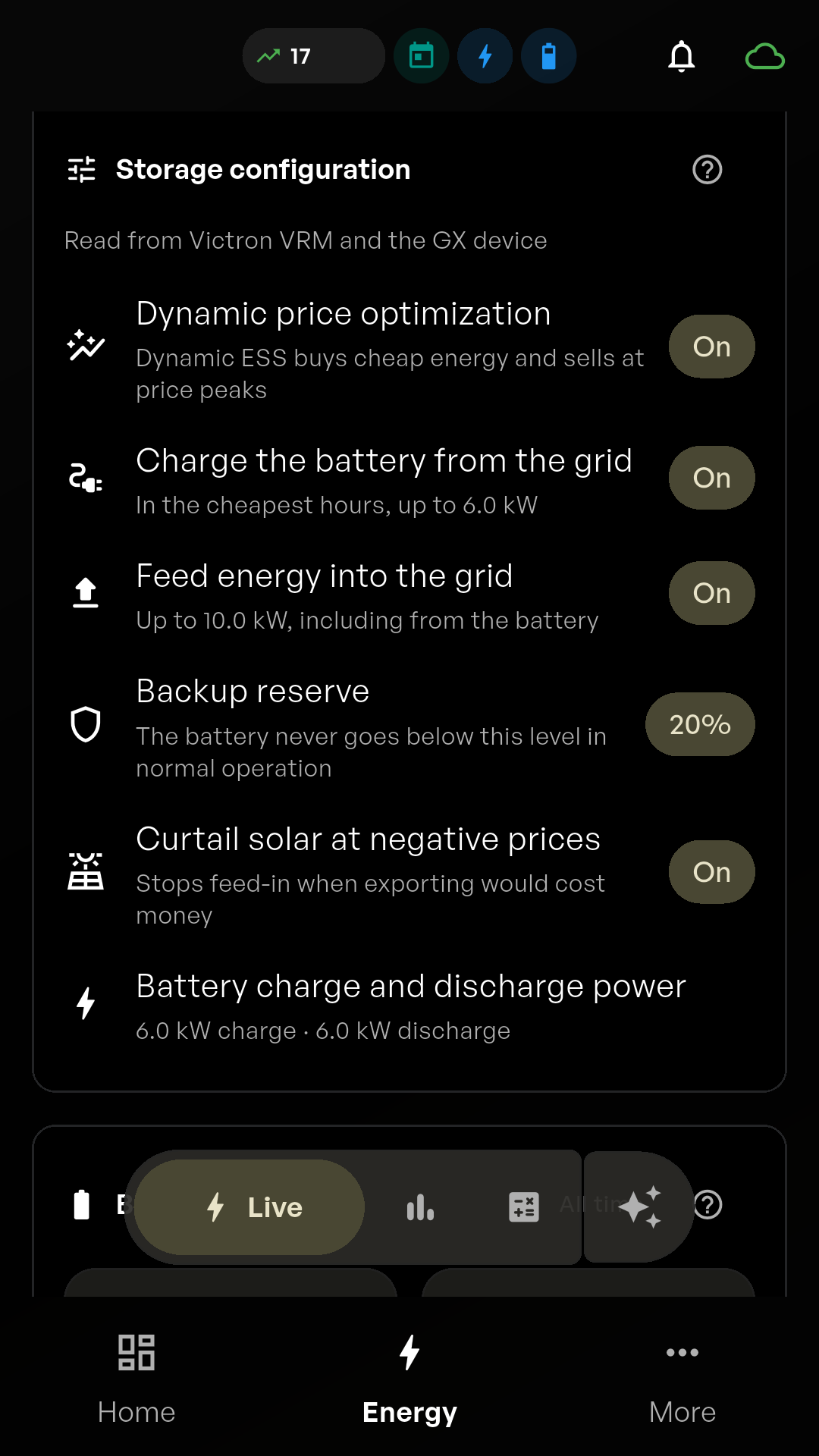
Earn on energy trading at dynamic prices. The system buys energy when it is cheap and uses it at home or exports it to the grid when it is dearer. Automatically, in line with your consumption and billing terms.
Applications open 20 October 2026 – 1 October 2027 or until funds run out.
Energy flow
Finance
Today's savings
+63.81 PLN
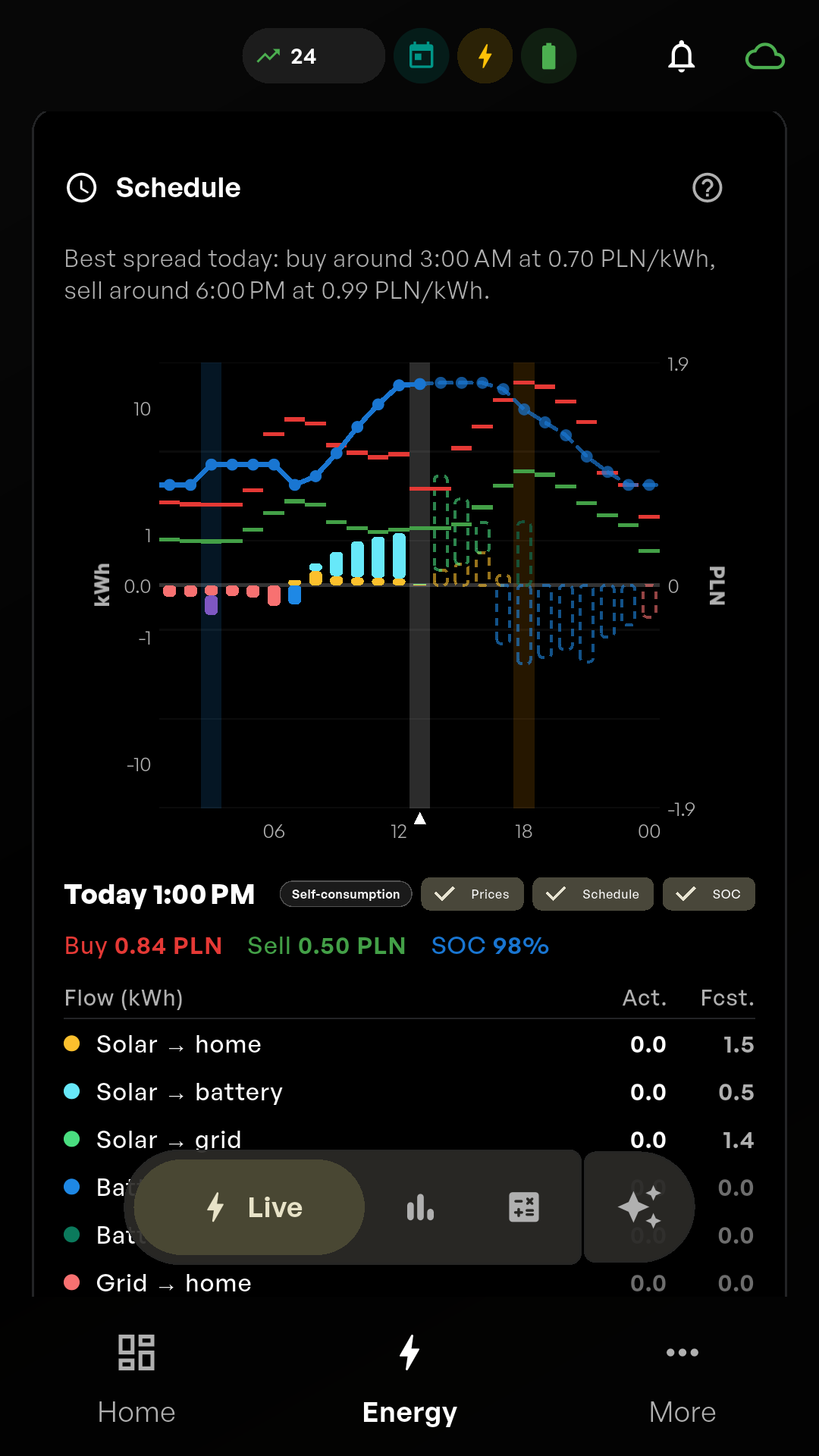
Schedule
Best spread today: buy around 13:00 at 0.26 PLN/kWh, sell around 19:00 at 1.25 PLN/kWh.
Three example configurations.
PME2 requires a storage capacity of at least 10 kWh and at least twice the PV installation power.
For PV installations up to about 7 kWp
Included: energy storage, inverter, Hombee Energy, installation and commissioning
Most popular
For PV installations up to about 15 kWp
Included: energy storage, inverter, Hombee Energy, installation and commissioning
For PV installations up to about 22 kWp
Included: energy storage, inverter, Hombee Energy, installation and commissioning
We tailor the final configuration to your installation, your energy use and the backup scope you need.
PV power, the inverter, your billing model, energy use, purchase and sale terms, and the circuits that must keep running during an outage. Only then do we choose the capacity, power and configuration of the system.
The size of the array sets the minimum storage capacity PME2 requires and shows how much summer surplus there is to store.
The inverter model and power decide how we connect the storage to the existing installation and how both devices cooperate during a grid outage.
The billing scheme decides whether it pays more to use energy on site or to sell it during the most expensive hours.
Annual consumption and its daily profile show which capacity really covers evenings and nights without buying from the grid.
Your tariff and hourly prices set when it pays to charge the storage from the grid and when to export energy.
We decide which circuits switch to storage power, from the fridge and heating to the whole house. That sets the system power you need.
We decide where the system charges the storage from, when it powers the home, when it can export energy to the grid, and which circuits are covered by backup power.
Hombee Energy connects photovoltaics, storage, the home and the grid into one system. The algorithm analyses production, consumption, the storage level and the purchase and sale terms, and directs the energy flow on that basis.
Illustrative simulation for the 30.56 kWh kit, a sample day with hourly prices and typical household consumption. We tune the real settings to your installation, tariff and habits.
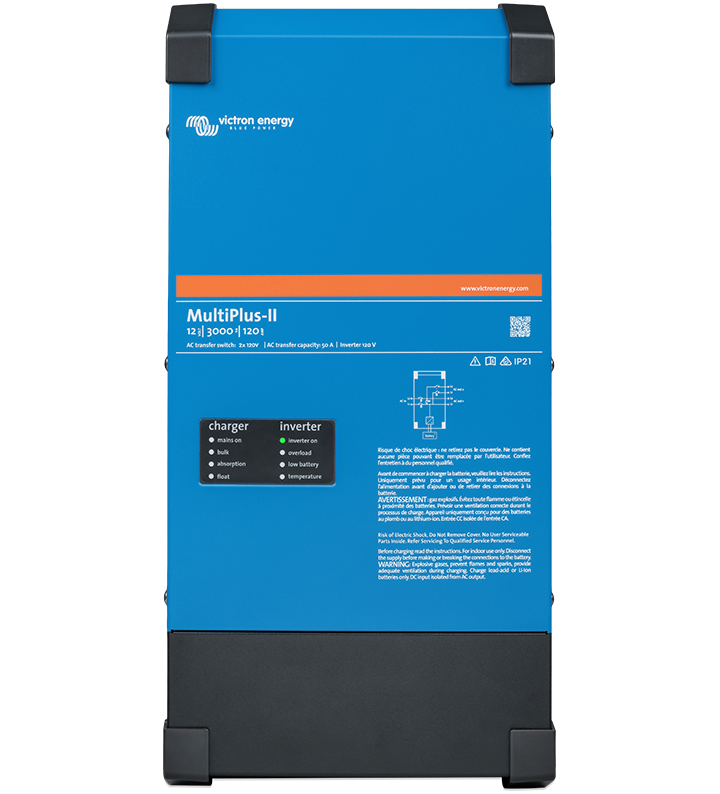
Inverter
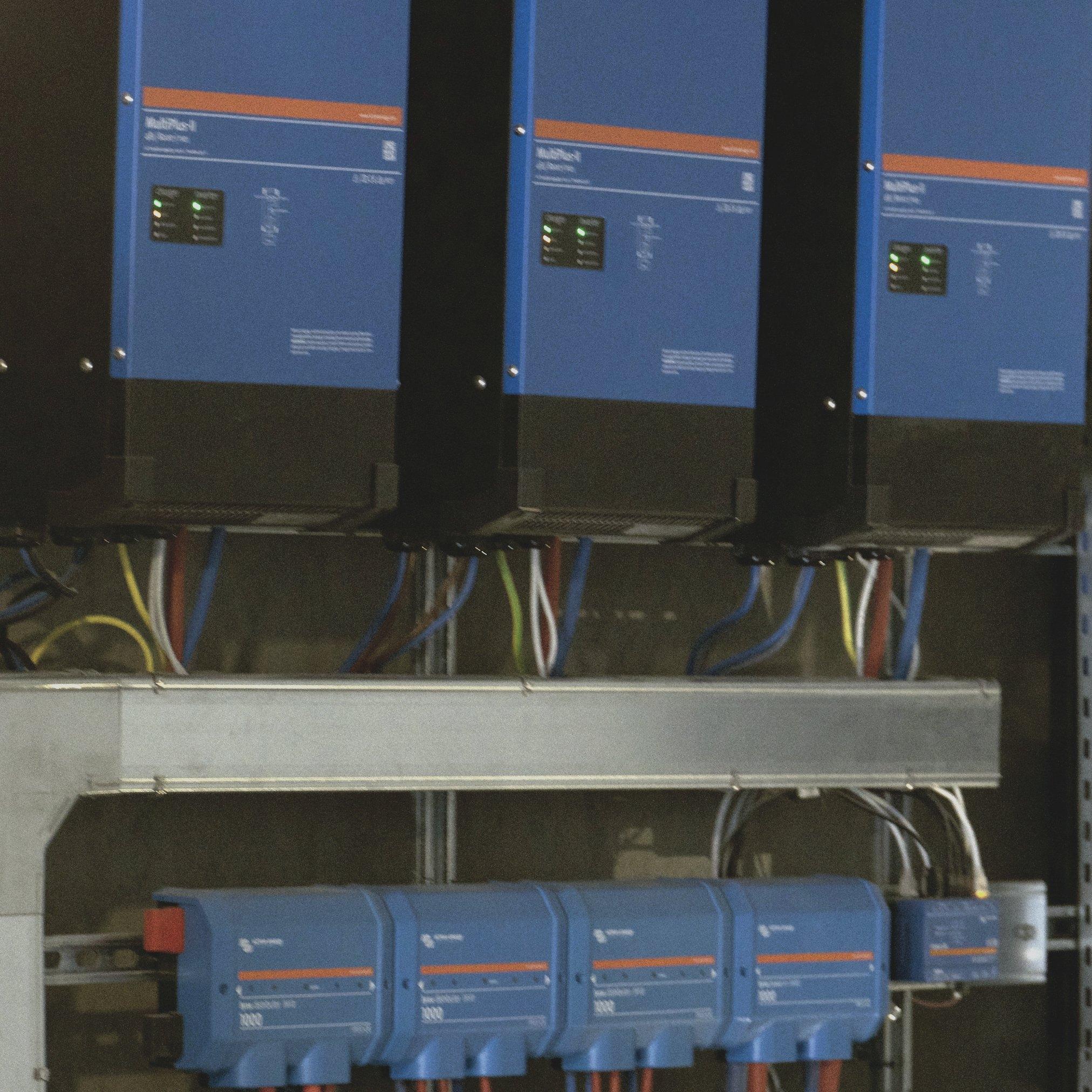
Inverter and charger in one. During a grid outage it switches the home to storage power in under 20 ms, so appliances keep running without interruption.
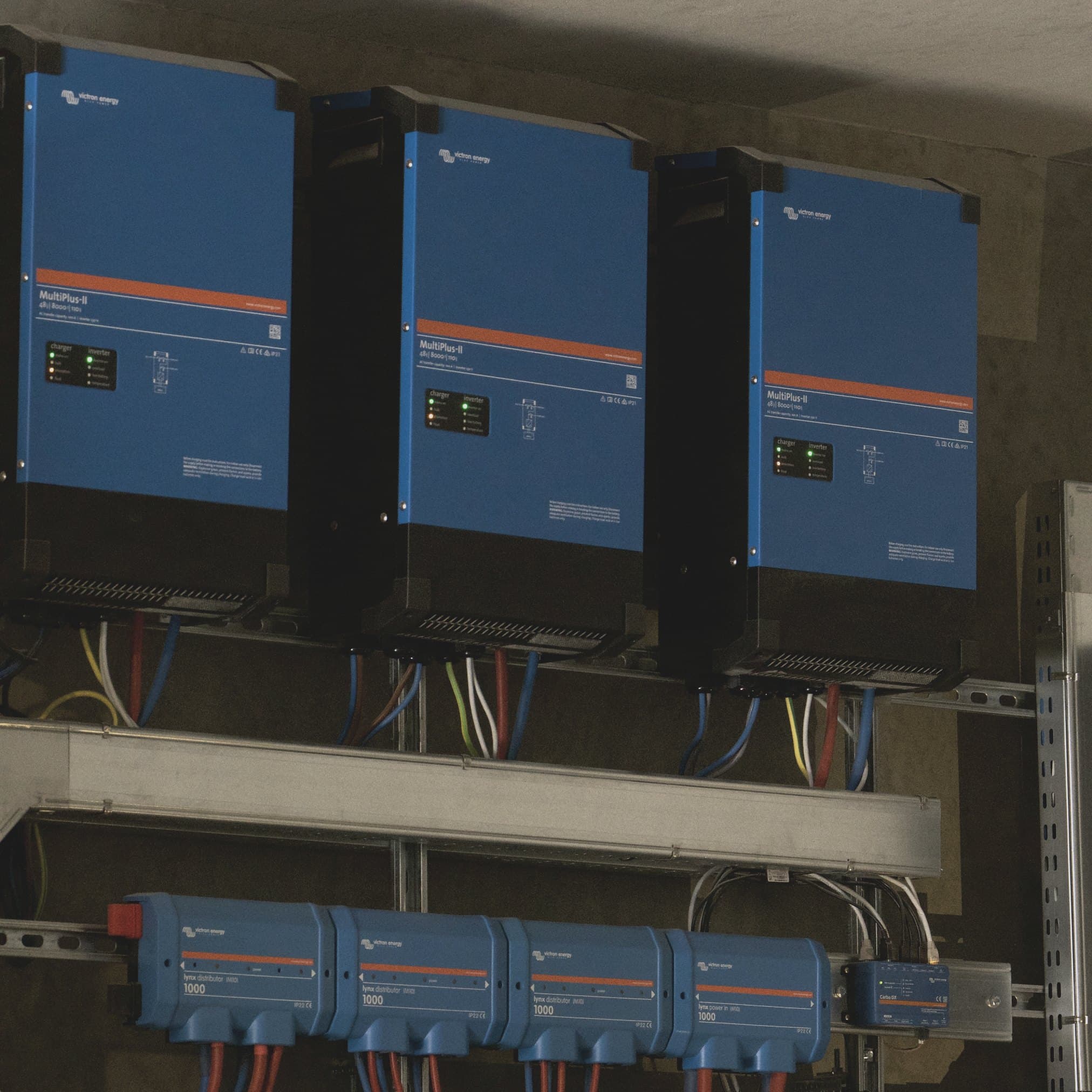
Our installation
Three MultiPlus-II inverters above Lynx distributors in one of our installations. Each phase has its own inverter, so backup power covers all three phases.
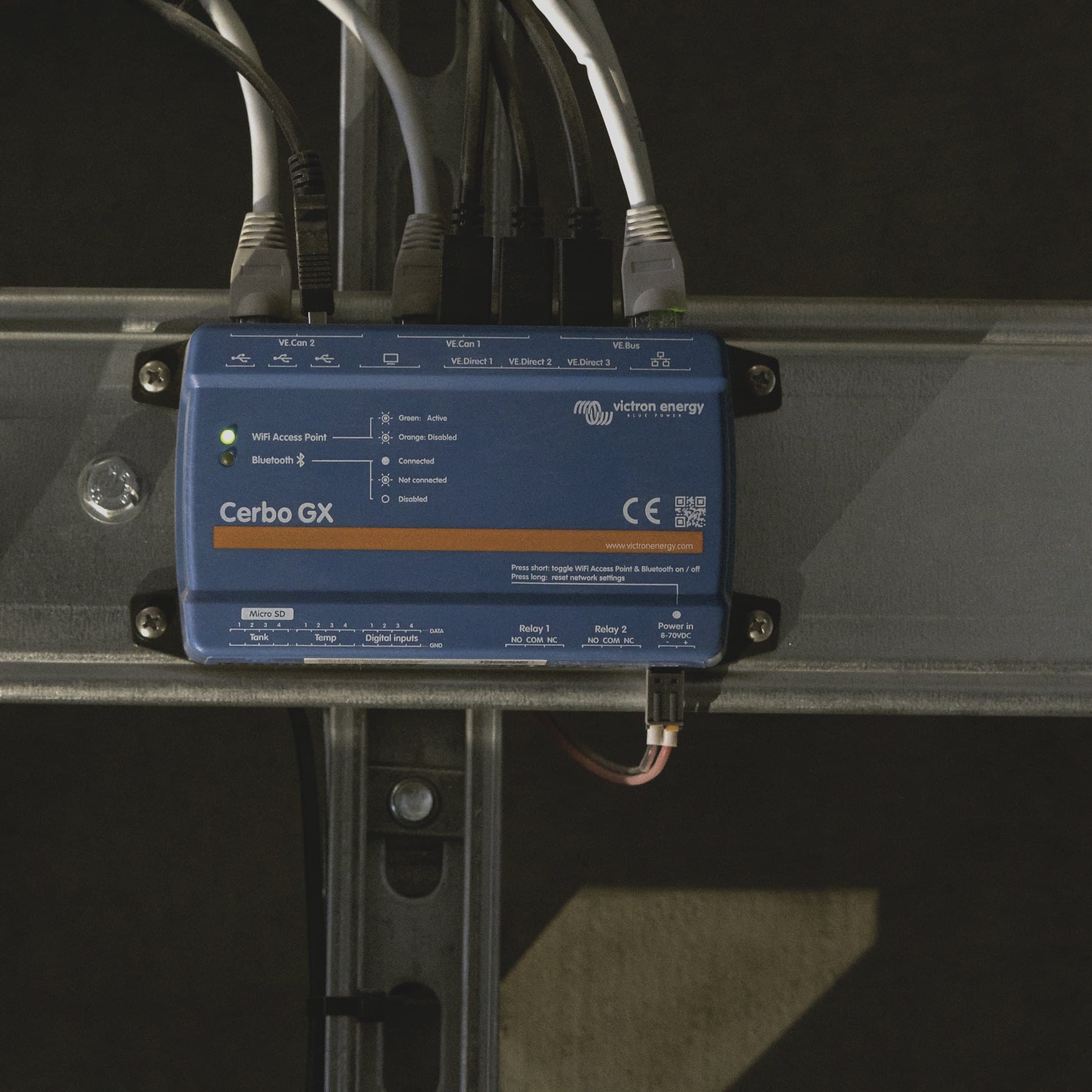
Controller
Collects data from the inverters, batteries and meter. Hombee Energy hands it the decisions: when to charge, when to power the home and when to sell energy.
Hombee Energy analyses energy prices, PV production, home consumption and the storage level. It then decides automatically when to buy, keep, use or sell energy.
Example 01
In the middle of the day the home uses less energy than the PV installation produces. The system sends the surplus to the storage and uses it to power the home later.
Example 02
When the energy price is favourable, the system can charge the storage from the grid. It accounts for the expected home consumption, PV production and the current state of charge.
Example 03
When buying from the grid is expensive, the system powers the home from the energy stored earlier. If the configuration and billing terms allow it, it can also sell energy back to the grid.
You do not have to track prices or control the storage by hand. The system does it automatically according to the configuration you set.
Since I switched to the dynamic tariff I produce more energy than I use, and I already have 1 100 zł sitting on my deposit. Since February I basically pay only the distribution fees. The system juggles energy really well. When the forecast says sunshine and exchange prices scrape the bottom, it does not push the PV surplus to the grid, it waits for a better price. A real speculator.
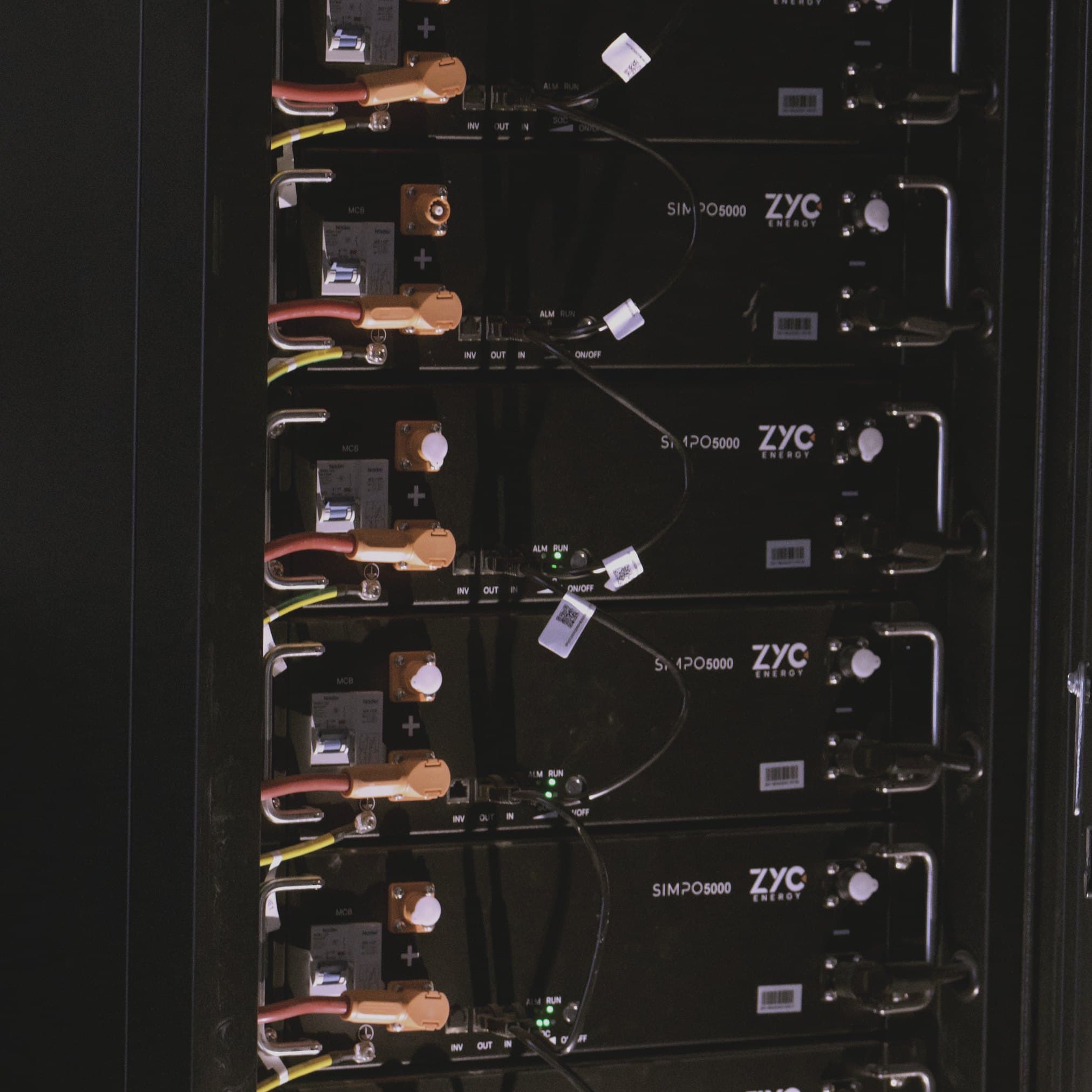
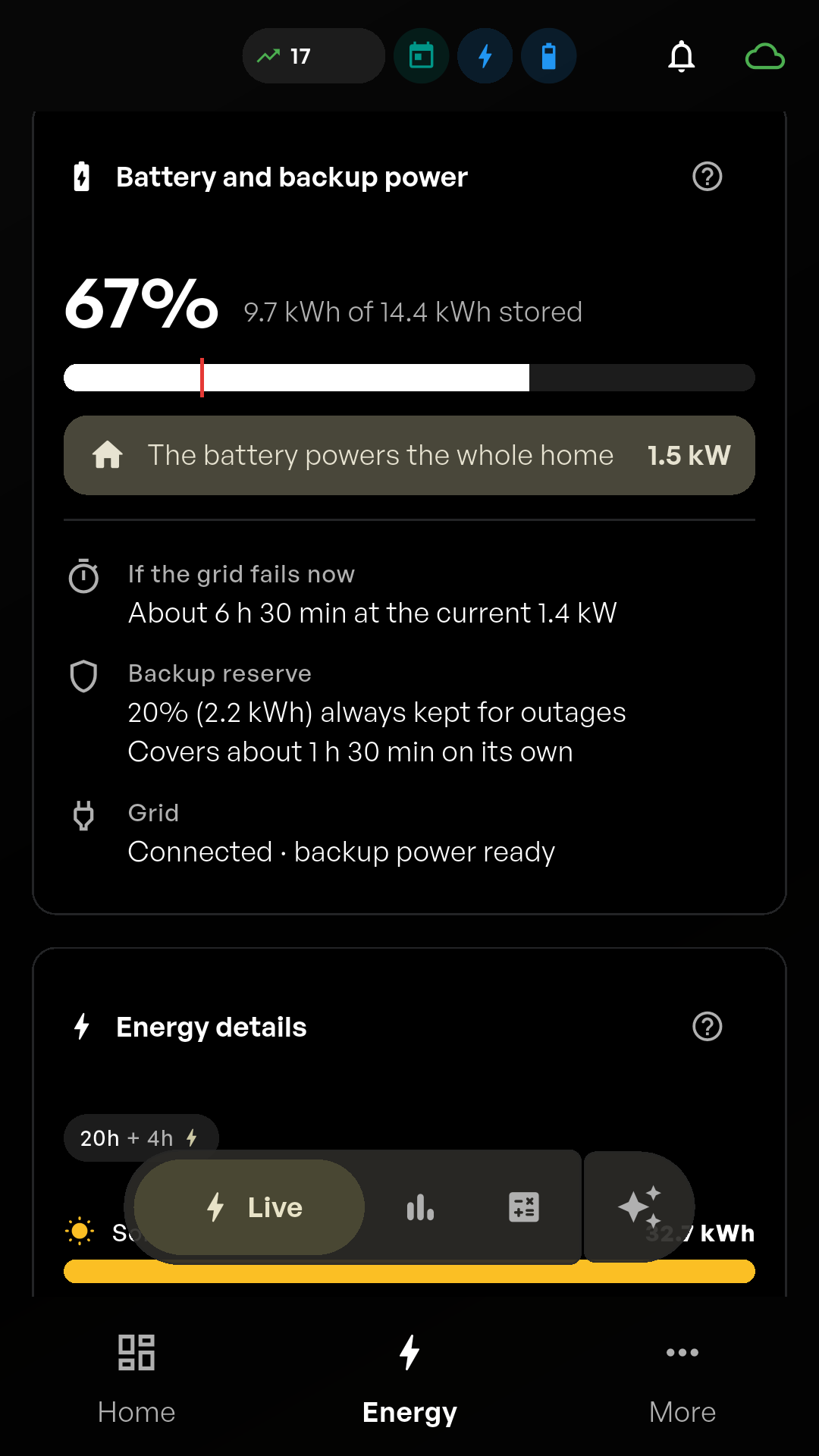
We design the backup scope for your specific installation. It can cover selected circuits or the whole home, depending on the system power, the storage capacity and the demand of your appliances.
Internet. Fridge. Lighting. Gate. Heat pump. Any other device that has to keep running. Before the offer we agree exactly what the backup covers. The runtime depends on the energy available in the storage and the current consumption.
The programme requires a nominal storage capacity of at least 10 kWh and no less than twice the peak power of the PV installation.
PV installation 5 kWp
10 kWh
minimum storage capacity
PV installation 8 kWp
16 kWh
minimum storage capacity
PV installation 10 kWp
20 kWh
minimum storage capacity
That is the programme minimum. The final selection also accounts for home consumption, the required power, the billing model and the backup scope.
Hombee is a Victron certified software integrator. We design, install and commission the system as a whole: storage, inverter, energy management and backup power.
Your offer includes a specific configuration, the price, the scope of work, and the warranty and service terms.
Five steps from the first details about your installation to the documents you need for the application.
PV power, the inverter model, your billing model, energy use and the backup scope you expect.
We choose the storage capacity, system power, the way it works with your photovoltaics, the backup and the rules for automatic energy management. We also calculate the possible PME2 subsidy.
We show the configuration, the gross price, the installation scope, the calculated subsidy and the cost after you receive it.
We install the devices and configure Hombee Energy, the backup power and the operating rules of the system.
We prepare the documentation for the installation we delivered and list the documents you need to complete on your side. The offer defines how much we help with the grid operator notification and the application.
In a short call we go through your photovoltaics, energy use and the circuits that must keep running during an outage. We also explain which details we need to calculate the subsidy.
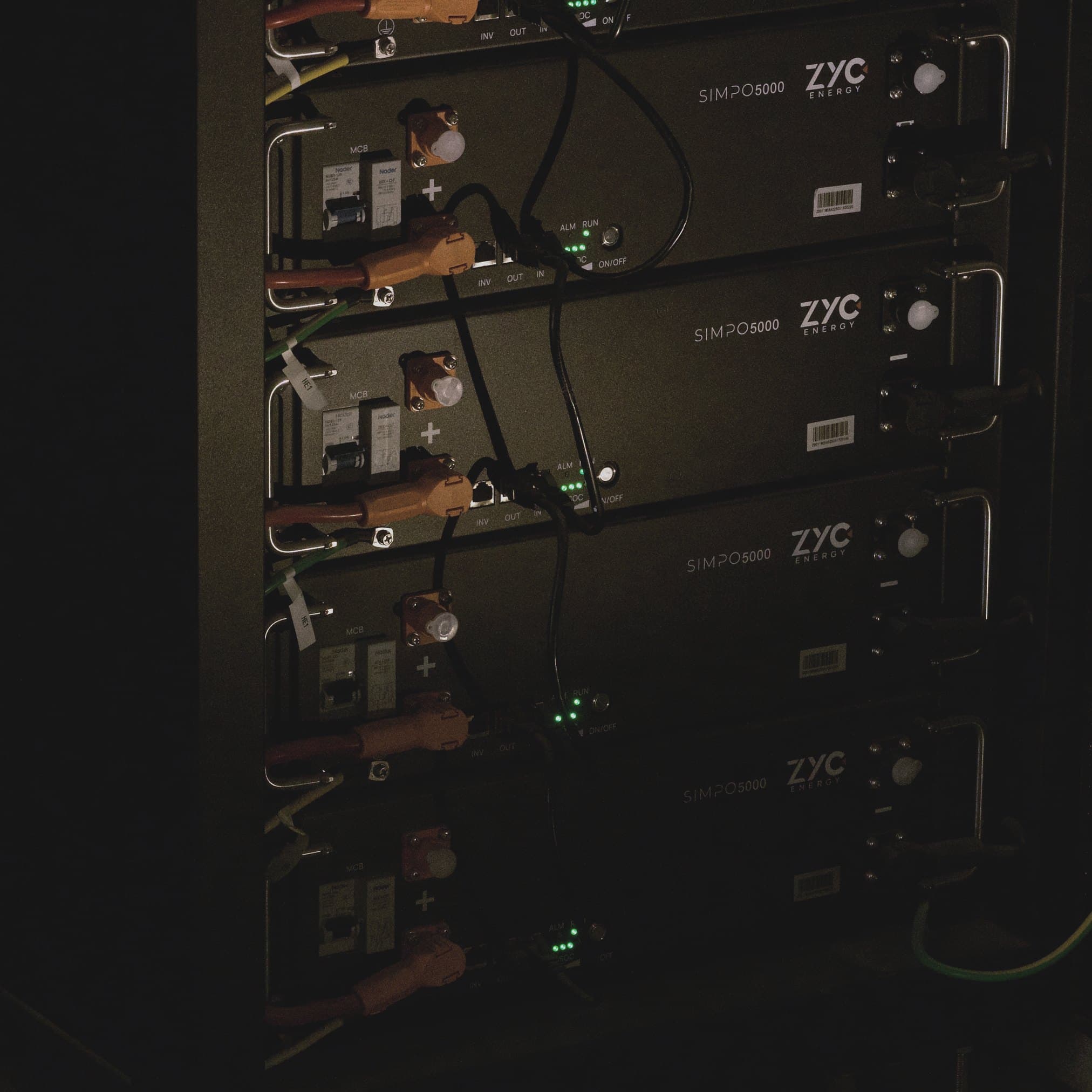
We never assume the maximum subsidy. We first check your billing model, the storage capacity, the cost estimate and the devices. Then, for a specific kit, we show the calculated support and the cost after the subsidy.
up to 16 000 zł
Under net-billing the storage subsidy can reach 16 000 zł, under net-metering 8 000 zł. The exact limits are in the questions below.
up to 2 000 zł
Extra support may apply, among other cases, to an eligible EU-made energy storage or to a required replacement of the inverter with a hybrid or equivalent EU-made device.
up to 1 000 zł
The programme also provides support for an eligible EU-made heat storage.
In total the programme provides up to 19 000 zł of support per point of energy consumption. The full amount requires meeting the conditions of every component. Not every kit automatically receives 19 000 zł.
The storage must work with an energy management system (EMS) and support island mode, which means backup power. We include both at the system design stage.
With the offer we show the system price, the calculated subsidy, the cost after you receive it, and the assumptions behind the calculation.
Tell us the basics about your installation. We will check which configuration fits your home and how much support you can receive.
The price depends on the capacity, power, devices and installation scope. For our kits we show the gross price of the complete configuration. After we assess your installation, we confirm the scope of work and the final offer.
No. We calculate the subsidy for a specific cost estimate and your situation. The full 19 000 zł requires a sufficient level of eligible costs and meeting the conditions of every component that makes up the maximum support.
Yes. The programme also supports prosumers on net-metering. The storage subsidy limit is then 8 000 zł. We check the remaining conditions for your installation.
The storage subsidy cannot exceed 30% of eligible costs or 800 zł per 1 kWh of nominal capacity. The purchase and installation price of the storage, excluding auxiliary devices, cannot exceed 3 000 zł per 1 kWh. The extra support of up to 2 000 zł and up to 1 000 zł for heat storage has its own conditions, which we check with the offer.
Not always. We check your current inverter model and whether it can work with the storage. If a replacement is needed, we include it in the designed configuration.
PME2 requires a capacity of at least 10 kWh and at least twice the PV installation power. That is only the programme minimum. When sizing the system we also account for your energy use, the required system power, the billing model and the backup scope you expect.
Yes, when the system configuration and your billing model allow it. The algorithm can plan charging the storage, using energy at home and exporting it to the grid, based on prices, PV production, consumption and the storage level.
No. The system analyses the operating conditions and controls the storage automatically according to the configuration you set.
It depends on your consumption profile, PV production, tariff, billing model and system parameters. Storage lets you use your own energy later and, under suitable conditions, buy from the grid in cheaper hours.
It can, but it depends on the configuration. Before we prepare the offer we agree which circuits the backup covers. The storage capacity, the system power and the demand of each device all matter.
It depends on the energy stored and the current consumption of the home. That is why we design the backup scope together with the system configuration, not during installation.
Among others, documents about the installation and the grid connection, invoices, payment confirmations, and the device and acceptance documentation. We prepare the documents for the system we delivered and list what you need to complete on your side.
Yes. Hombee is a Victron certified software integrator. We select, install, configure and commission the complete system.